


9 Reasons Why Visitors Leave Your Website (And How to Fix Them)
You have spent months of time, energy and money getting your website up and running. It looks great. Then you check the stats and something is wrong: people are arriving, and leaving almost immediately. They are not buying, enquiring, signing up, or even staying long enough to look around.
Here is the good news. Most visitors are not leaving because they dislike your business. They are leaving because of common, fixable problems, and almost all of them come back to the same root cause: the site does not answer what the visitor came to find out.
No technical jargon below, just practical things you can check and change.
The five questions every visitor is really asking
Every time somebody new lands on your website, they are interviewing your business. There are five things they need to know before they will trust you enough to make contact:
- Who are you?
- What do you do?
- How can you help me?
- Can I trust you?
- How do I get in touch?
The first three should be answered in the hero area, before anyone scrolls. Number three is the one that matters most, because it is entirely about them rather than you. If your site fails these, visitors leave and look elsewhere, which is a very efficient way of sending traffic to your competitors.
I raise this because so many businesses resist it. They want the website to be about them rather than about the problem the customer is trying to solve. They talk about themselves so thoroughly that they never get to the why-them.
Who are you?
You get one shot at telling people who you are, and it needs to go beyond your name. Consider this:
“Green Thumb offers quality household and commercial lawn and garden services.”
Nothing there separates them from a thousand other businesses doing exactly the same thing. The only useful signal is who they serve. Keep it simple, but make it specific.
What do you do?
This is more than stating that you are a gardener. It is your chance to present services as solutions to a client’s problem:
“With 25 years experience, Green Jim’s delivers quality garden services in a carbon neutral way that is second to none.”
How can you help me?
The most important question of the five. Visitors need to know they are in the right place to solve the problem they have right now. Overgrown gardens, regular lawn care, lawn coring: name the problem, not the category.
One of the trickiest problems we deal with is a business that wants to promote everything and consequently promotes nothing. Occasionally a business arrives wanting to sell motorbikes and hardware on the same site. Is that the same customer, or two completely different ones? Without a decision, the messaging cannot be focused, and unfocused messaging is the most common reason a good-looking site does not convert. That decision is the whole point of building a site planned around a messaging framework rather than around a page list.
The nine reasons visitors leave
1. Your first five seconds do not land
The first five to ten seconds of a visit decide the rest of it. People make snap judgements, so if you do not engage them immediately you have lost them. Use clear, bold headlines that say what you do for whom. Add an image or short video at the top of the page only where it genuinely illustrates the point.
2. The page is slow
A slow site is one of the most common causes of abandonment. Yours should load in under two seconds. Test your speed, and make sure you select an Australian server when you do. If it takes longer than two seconds it either needs optimising or needs a better host. There is a lot more detail on technical testing in my article on website speed.
3. Navigation makes them hunt
If it is hard to find the information they came for, they leave. Your navigation should be easy to use and should surface your most important pages. Look at yours now: is every important page reachable in a single click? If not, it needs updating.
Sometimes this is a design decision rather than an oversight. A designer may prefer the clean look of hiding the menu. Clean is good, but expectation matters too, and visitors expect to find a menu where menus live.
4. Nothing establishes trust

People buy from businesses they know, like and trust. If your site looks dated or carries no trust signals at all, visitors will not feel safe contacting you, let alone buying. Reviews, testimonials, case studies and accreditations all help. Seeing other people getting a good result makes the decision far easier.
5. The content is about you, not them
What’s in it for me? This is the classic mistake, and it is the one StoryBrand-style thinking exists to solve. Visitors want to know how your product or service helps them. If your copy is full of “I” and “we”, rewrite it around “you”.
There is more on the case for being helpful rather than salesy in solve, don’t sell.
6. There is no clear next step
Every page should have one obvious next step: buy, request a quote, fill in the form, subscribe. Go through your pages and ask what each one is asking the visitor to do. If a page asks nothing, it is a dead end.
A website should work like a journey. The visitor chooses their own path, but a considered strategy of words and images makes sure the path they choose is the one you wanted.
7. Mobile is an afterthought
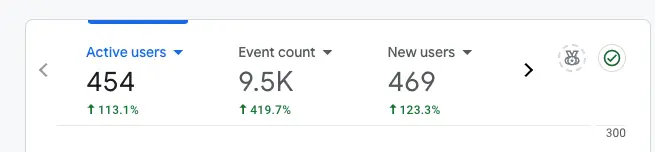
The usual advice is that more than half your visitors are on a phone. That is often true, but not always, and the difference matters more than the average does.
I pulled our own numbers from Google Analytics: Get Leads sits at around 12% mobile. Then I compared a client in Sydney selling fruit and vegetables, who runs at 65%. Same country, same year, wildly different visitor. Design decisions that are right for one of those sites are wrong for the other.
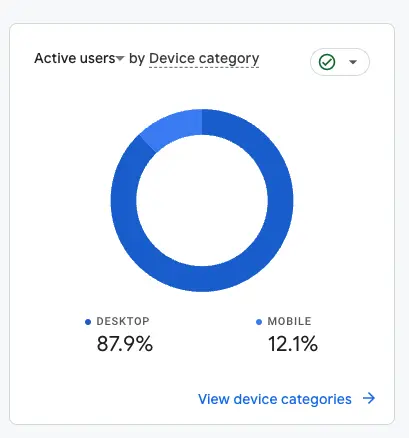
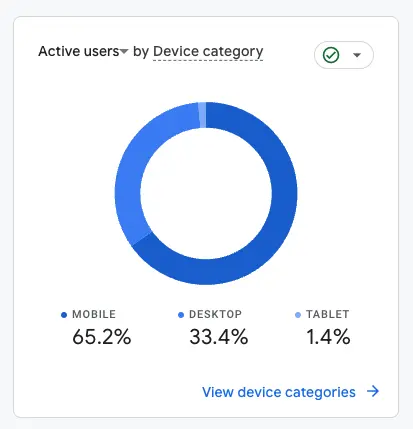
So do not take the average as read. Check your own analytics, then test your site on an actual phone. Is it easy to navigate? Note every friction point, because every one of them is fixable.
8. Your contact path adds friction
Having a contact page and a phone number in the header is the minimum, not the strategy. Your contact page should carry hours, name, address with a map, phone and a form. But my preference now is an inline or popup form at the point of interest, rather than sending someone off to a contact page to start again.
Make it quick and keep the fields few. Everything else can be established on the first phone call.
One more thing, because I am asked it constantly: can you link my Facebook and Instagram from the contact page? I avoid it where I can. Why hand the conversion to a platform you do not control, where your posts sit beside your competitors’ ads? You have brought the visitor all the way to the point of contact. Do not send them somewhere else to be distracted.
9. Your calls to action are passive
There should be at least two calls to action on every page, and they should ask the visitor to do something specific. Keep the language consistent across the site, and keep it active rather than passive.
Compare “Call us!” with “Contact Us”, or “Let’s chat” with “Contact”. Then pair the active phrasing with a question that names the visitor’s problem and offers the solution. That combination is what moves someone from reading to acting.
Trust takes more than a testimonial wall
Trust deserves more than a line in a list, because it is the thing I keep coming back to and never entirely solve.
Different people trust different signals from different sources. What actually makes somebody act is an emotional response that they then justify to themselves as logical. I could tell you to put up testimonials, awards, portfolios, certifications and social proof numbers, and you should. But that is half the story, and it is the half every second website has already done.
Leading with genuine helpfulness works better than running a playbook the visitor has seen a hundred times. I am not saying skip the testimonials. I am saying do not expect them to convert on their own.
In practice I expect a brand to need something like eight consistent touch points across different places before somebody finally makes contact. That is why I email our customers once a month to say we are still here, reach out directly twice a year, and run ads periodically. Better to be seen doing something than nothing.
Where to start
If you only do three things this week:
- Open your homepage and check whether the first three questions are answered before anyone scrolls.
- Run a speed test on an Australian server and find out whether you are under two seconds.
- Check your own mobile share in Google Analytics, then use your site on a phone and note every point of friction.
None of those need a developer, and between them they will tell you whether the problem is the message or the machinery.
Fixing the reasons people leave is one half of the job. The other half is giving them a reason to act — here are seven practical ways to turn that traffic into enquiries.
If people are landing and leaving and you cannot work out which of these nine is the culprit, we can look at it with you. That is the work we do at Get Leads AU, whether you are in Cairns, Wagga or anywhere else: work out what the visitor came to find out, then build the site to answer it.